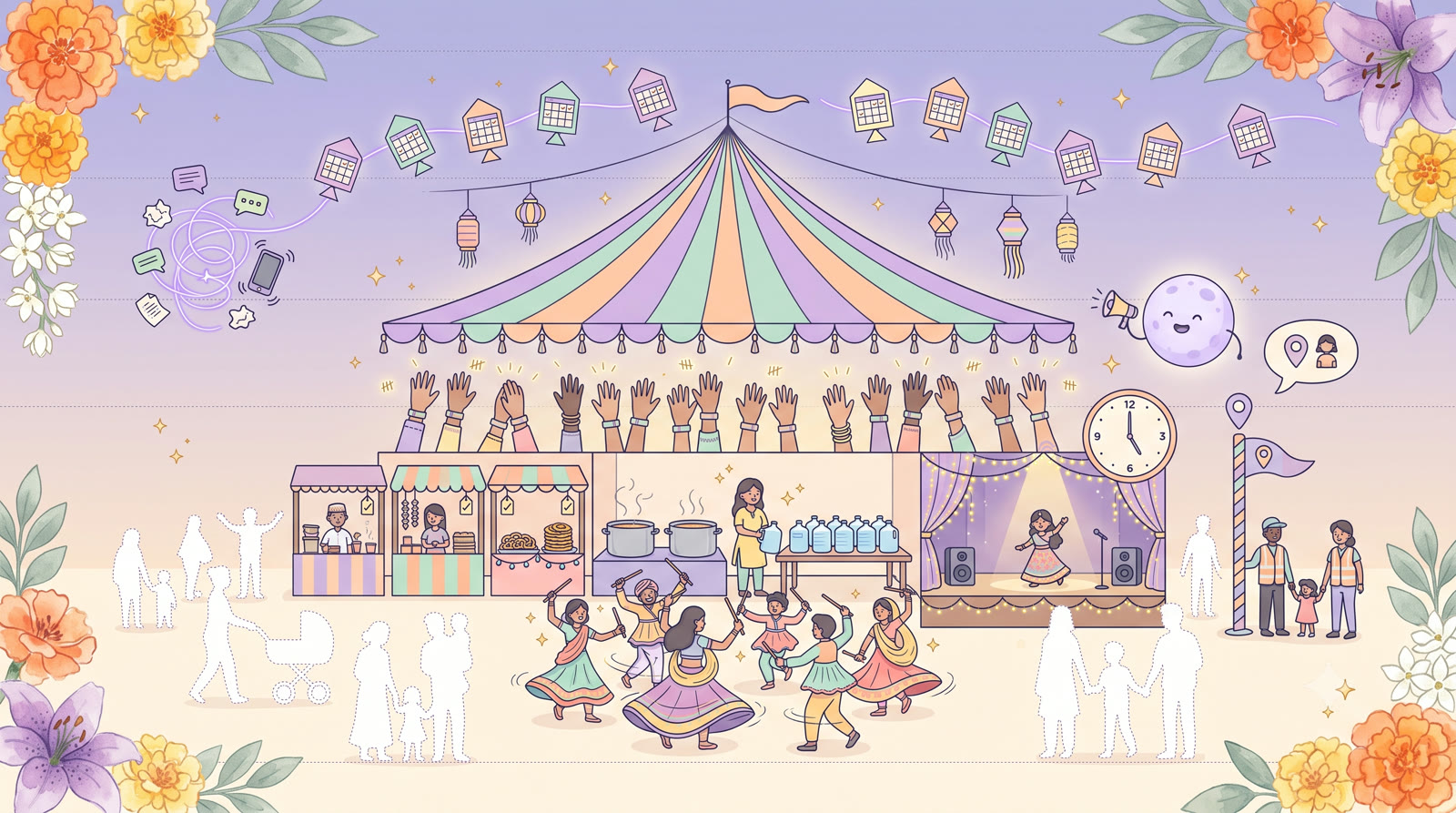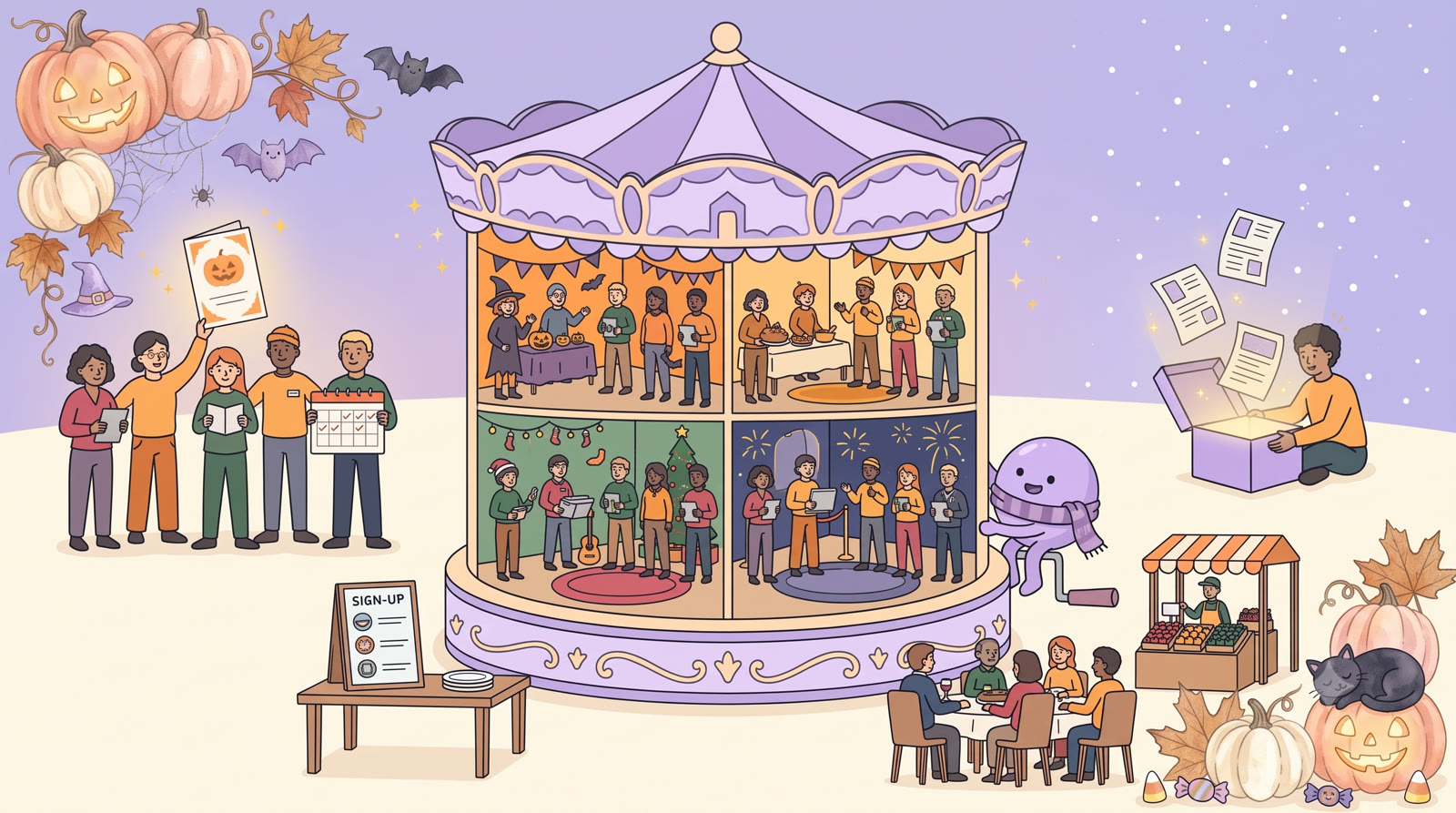
Most planning advice treats an event as something that happens once. Halloween, Thanksgiving, Christmas and New Year’s Eve are not that. They arrive in a run — four dates inside ten weeks, usually on one calendar, usually organised by the same handful of people, often in the same hall with the same folding tables. Plan them one at a time and the fourth one is held together by whoever still has the energy.
The season is the unit, not the party
The person who ran the welcome desk at the Halloween party is the person you want on the desk in December. By then they have been asked four separate times, in four separate messages, and the fourth ask is the one that gets a maybe.
Ask once, for the season. A list that covers all four nights is far easier to fill in early October than a fourth list is in the third week of December, when everyone is already committed to something. The same applies to the kit: the hall, the tables, the urn, the extension leads, the PA and the folding chairs are the same four times over. That is one inventory, not four.
Some of these you can count. Some you cannot.
This is the distinction that decides how the whole thing is run, and it is easy to get backwards.
A Friendsgiving, an office Christmas dinner, a New Year’s Eve party with a seated meal — these have a guest list. Turn the RSVP on. You want a real headcount, you want the dietary answers, and you want them before the caterer needs the number.
A tree lighting, a trunk-or-treat, a Christmas market in the car park — these are open. Nobody is going to RSVP to a thing they can simply turn up to, and an RSVP form on an open event is worse than none at all, because it produces a number that looks authoritative and is in fact a small fraction of who comes. Plan those in ranges, and count the things you genuinely can: volunteers signed up, stalls confirmed, portions cooked, parking spaces.
“Bring a dish” is most of the plan
For a Friendsgiving and for most community Christmas parties, the catering plan is the sign-up sheet. It splits the way a table does — starters and snacks, a main, bread, dessert, drinks and ice, and plates and cutlery — with a number against each, because “bring something” reliably produces nine desserts and no bread.
The note beside each name is where what they are bringing goes, which is the part that turns a list of volunteers into an actual menu you can read a week out. And plates, cutlery and ice are the lines nobody ever volunteers for unprompted, which is exactly why they need a row with a number on it rather than a hope.

Helpers come in shifts, not in roles
Setup and decorations an hour before. Serving and refills during. Photos. Clean-up and packing up the leftovers, which always needs more hands than anyone writes down.
“Help with the Christmas party” sounds like losing a Saturday and gets declined. “An hour before it starts, putting up decorations” sounds like an hour, and gets a yes from the same person. The ask is the whole difference, and it costs nothing to phrase it the second way.
A running order, even for a party
Parties drift, and the things that drift are the things people came for. Santa arriving. The raffle. The speeches nobody wants but everybody expects. On New Year’s Eve, the countdown — the one item in the entire season that genuinely cannot run late.
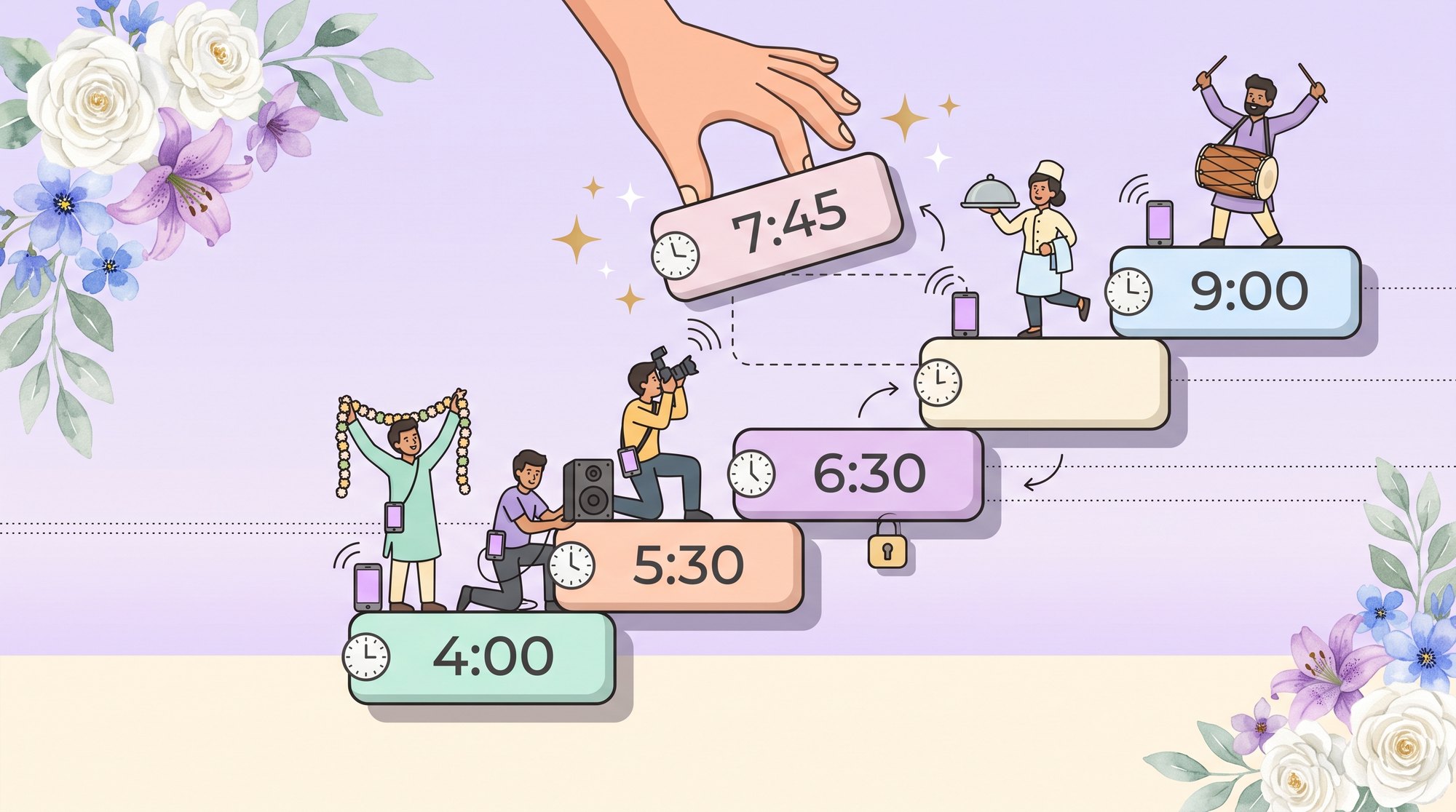
A shared run of show with times against items means the DJ, the kitchen and whoever is holding the microphone are reading the same page instead of three different ones. It takes ten minutes to write and it is the difference between a party with shape and a room that slowly empties.
Book it before October
Every company, church, school and neighbourhood association within twenty miles wants the same Friday in December. Caterers, DJs, photographers and the people with the inflatable snow globe are booked out by early autumn, and the ones still free in November are free for a reason.
Keeping each supplier as its own entry — who they are, what was agreed, what is still owed, when they arrive — is most of the difference between running four events and surviving four scrambles.
Four parties, one place to run them from.
Sign-up sheets that know how many of each dish you need, an RSVP you can switch on for the seated nights and leave off for the open ones, a run of show everyone can see, and every supplier kept with what they agreed to.
Plan Your Season FreeWhat is worth keeping
The event does not disappear when the party does. Next December, last December is still there to read: the running order that worked, the caterer who turned up when they said they would, the sign-up sheet that filled, and what the whole thing actually cost. That is the quiet advantage of running the season in one place rather than across four chat threads and a spreadsheet somebody has since left the company with.
Four parties in ten weeks is not four times the work. It is one season’s work done four times — but only if you planned it as a season.
Decide which nights have a guest list and which do not. Put a number against every dish and every shift, and ask for all four at once. Write the running order down. Book in September. The rest is the fun part, which is the part you wanted to be doing anyway.