A run-of-show is the wedding’s heartbeat — the minute-by-minute timeline that tells everyone what happens, when, and who makes it happen. When it’s clear, the day flows. When it lives only in the couple’s heads, the photographer misses the first look and dinner runs forty minutes late. Here’s how to build one your vendors will actually thank you for.
What a run-of-show is (and isn’t)
It isn’t the pretty timeline guests see on the invitation. It’s the working document — the back-of-house schedule that includes the unglamorous but crucial moments: vendor load-in, the band’s sound check, the photographer’s golden-hour window, when the caterer plates dinner, and when the cake actually needs to be in the room.
Anatomy of a step
Every good entry answers four questions:
- When — a real clock time, not “after the ceremony.”
- What — the moment itself (Baraat arrives, first dance, speeches).
- Who — the vendor or person responsible for making it happen.
- Where — which room or space, if the day moves around.
A sample evening, sketched
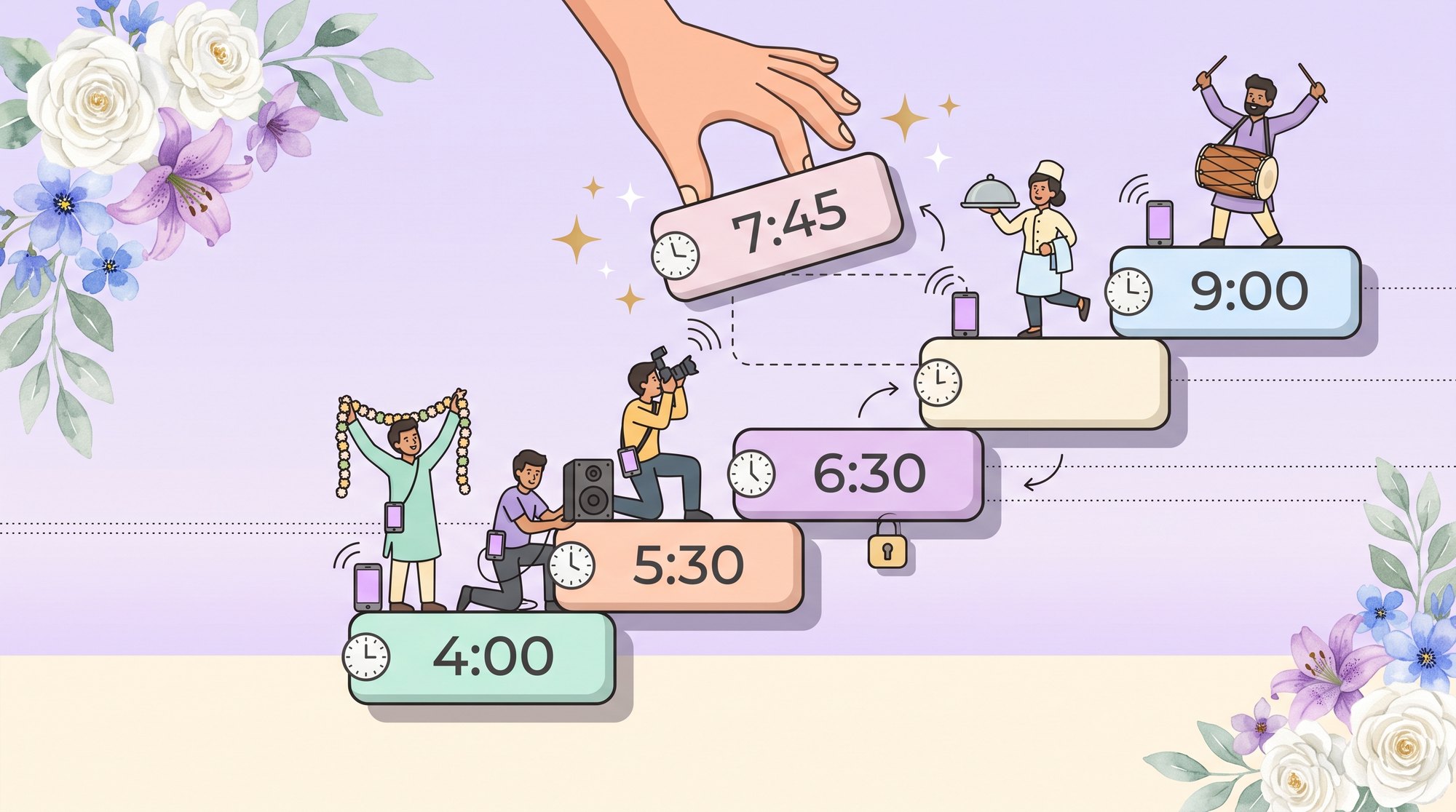
- 4:00 PM — Vendor load-in; decor and AV setup begins.
- 5:30 PM — Sound check; photographer captures details and venue.
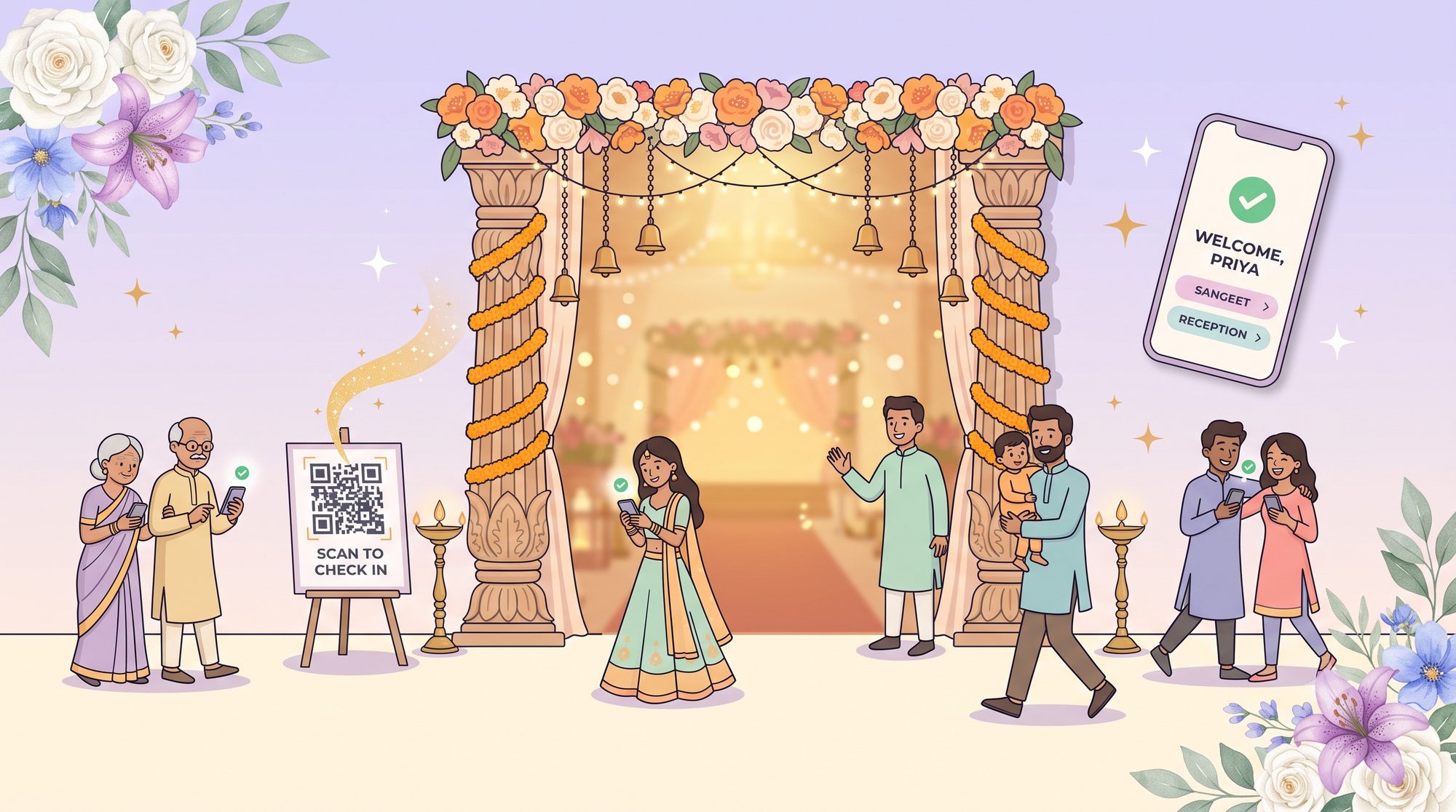
- 6:30 PM — Guests arrive; QR check-in opens at the entrance.
- 7:00 PM — Grand entrance, then first dance.
- 7:45 PM — Dinner service begins.
- 8:30 PM — Speeches and toasts.
- 9:00 PM — Open dancing.
- 11:00 PM — Send-off; vendor strike begins.
The exact moments vary by culture and couple — but the discipline of a real clock time and a named owner for each step is universal.
Three rules that keep it on track
1. Build in buffer
Things run long — the speeches, the photos, the auntie who must hug everyone. Pad the transitions by ten or fifteen minutes so a small delay doesn’t cascade into the whole night.
2. Give vendors only what they need
Your caterer doesn’t need the seating drama and your band doesn’t need the catering notes. A shared timeline where each step is clear — and where private notes stay private — keeps everyone focused.
3. One version, updated live
The day-of is exactly when a printed timeline goes stale. If you move dinner by fifteen minutes, every vendor should see it — not the copy from last Tuesday.
A run-of-show that updates the moment you do
In eventsplanning.ai, build your timeline, drag steps to reorder them, and share a live run-of-show with vendors and guests — keeping internal notes hidden until you choose to share.
Build Your Timeline FreeVendors don’t need more meetings. They need one clear timeline they can trust — and that updates when plans change.
Nail the run-of-show and the day stops feeling like a series of near-misses and starts feeling like the celebration you planned. Build it once, keep it live, and let everyone — from the dhol player to the caterer — move to the same beat.