A reunion is the only event where the guests are also the committee, the sponsors and half the entertainment. Nobody is being paid, nobody is the client, and the people organising it are doing it in the evenings after work, from four different cities. That changes what a plan has to survive.
Nobody is the client
A wedding has a couple. A conference has a company. A reunion has a dozen volunteers who agreed to this on a call in January and now have jobs, children and a time zone between them.
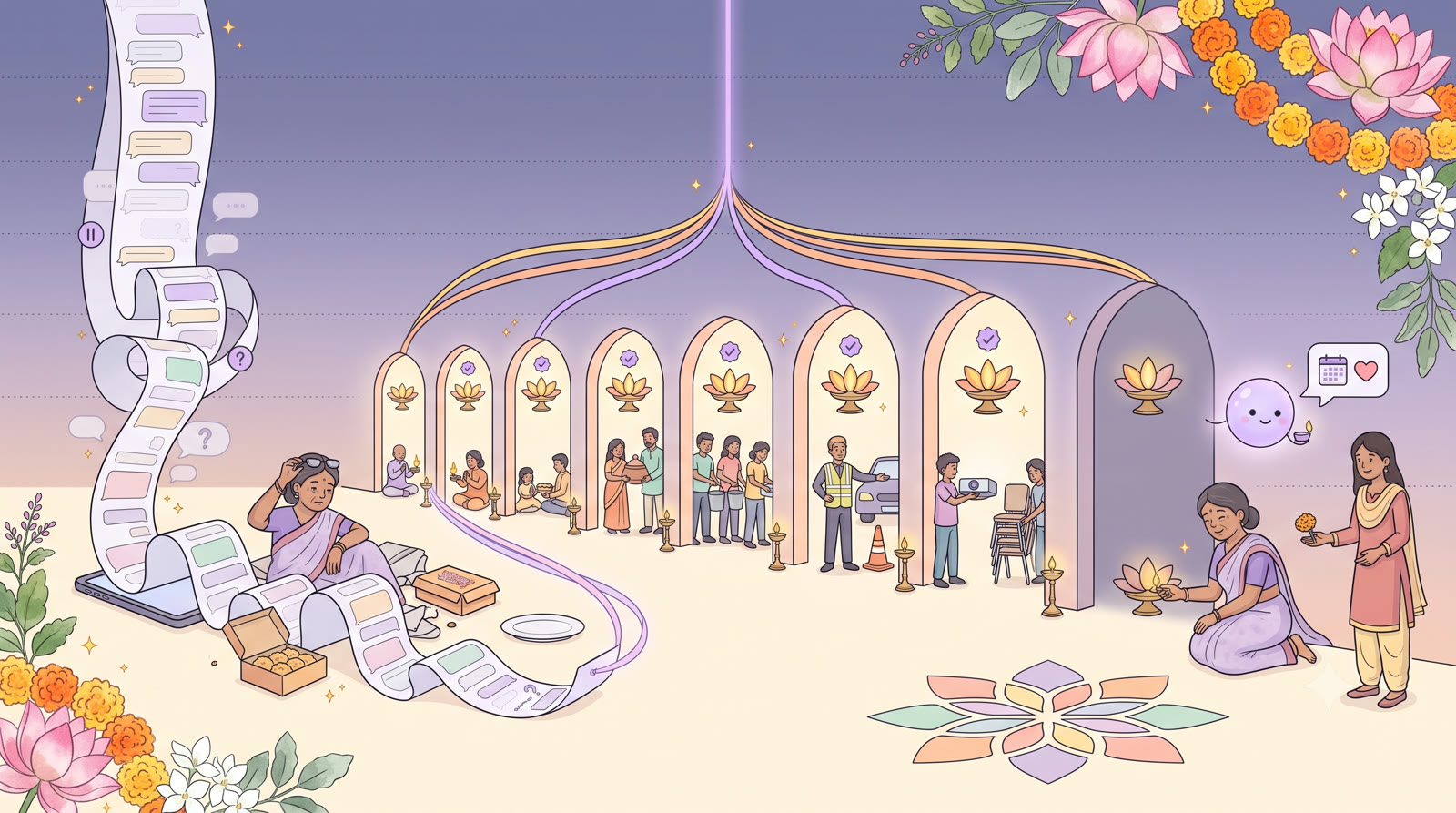
The practical consequence: your plan has to survive being put down for two weeks. Anything that only exists in one person’s head, or in the scroll of a group chat, will not. Anything written down where all twelve can see it will.
Tracing the batch is the first job, not the last
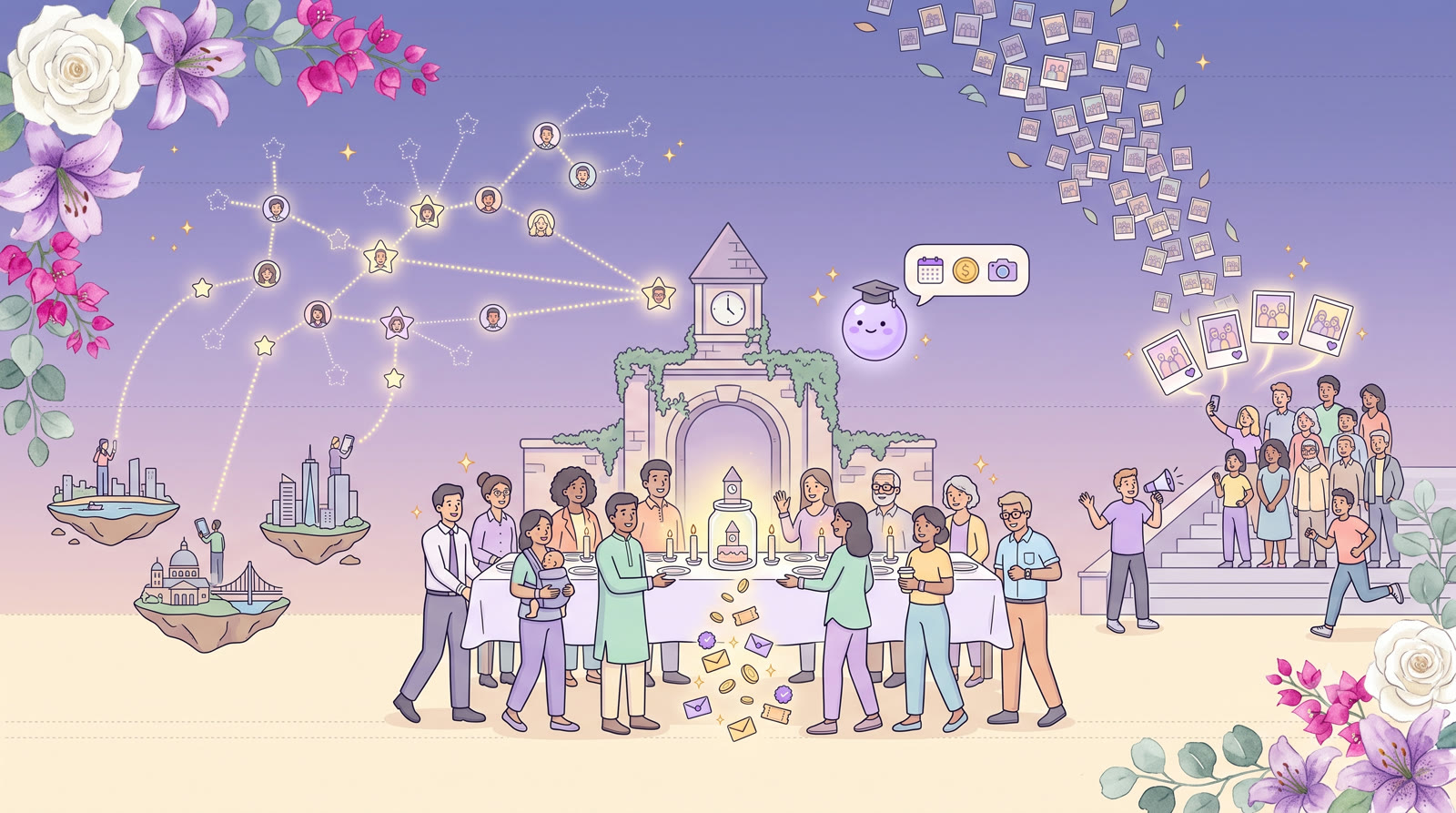
Before anyone can RSVP, somebody has to find them. This is the single most underestimated part of a reunion, and it does not parallelise well — it is phone calls and WhatsApp, one person at a time.
What works is small quotas: two or three names from each batch is enough to start a chain. Eight people each chasing their own year will out-perform one person with a spreadsheet every single time. What you will end up with is not a list but four overlapping lists, which is normal, and is why the RSVP has to do some of the de-duplicating for you.
The RSVP has to ask which batch
At a wedding the RSVP asks whether you are coming and what you eat. At a reunion it has to ask which batch and which branch, because almost everything downstream keys off that answer: the seating, the badges, the souvenir booklet, and the batch photographs that somebody will spend the entire afternoon herding people into.
Batch photo wrangling is a real job, with a real person assigned to it. Put it on the volunteer list with a name next to it, or it happens at 6pm in bad light with half the batch already gone.

The money runs the other way
This is the structural difference nobody warns you about. At most events money goes out: you pay the venue, the caterer, the decorator. At a reunion, money mostly comes in — contributions per head, tickets, and sponsorship from alumni who now run firms and would quite like the banner.
So the question you need answered at any moment is not only “who is coming” but “who has paid”, and those two lists are never the same length. Track them together from the first week, not in the last one.
Batch, branch, and who has actually paid.
An RSVP that asks which batch, committee sign-ups with real numbers against them, and contributions tracked beside the headcount instead of in a second spreadsheet.
Start Your Reunion FreeCommittees, with numbers attached
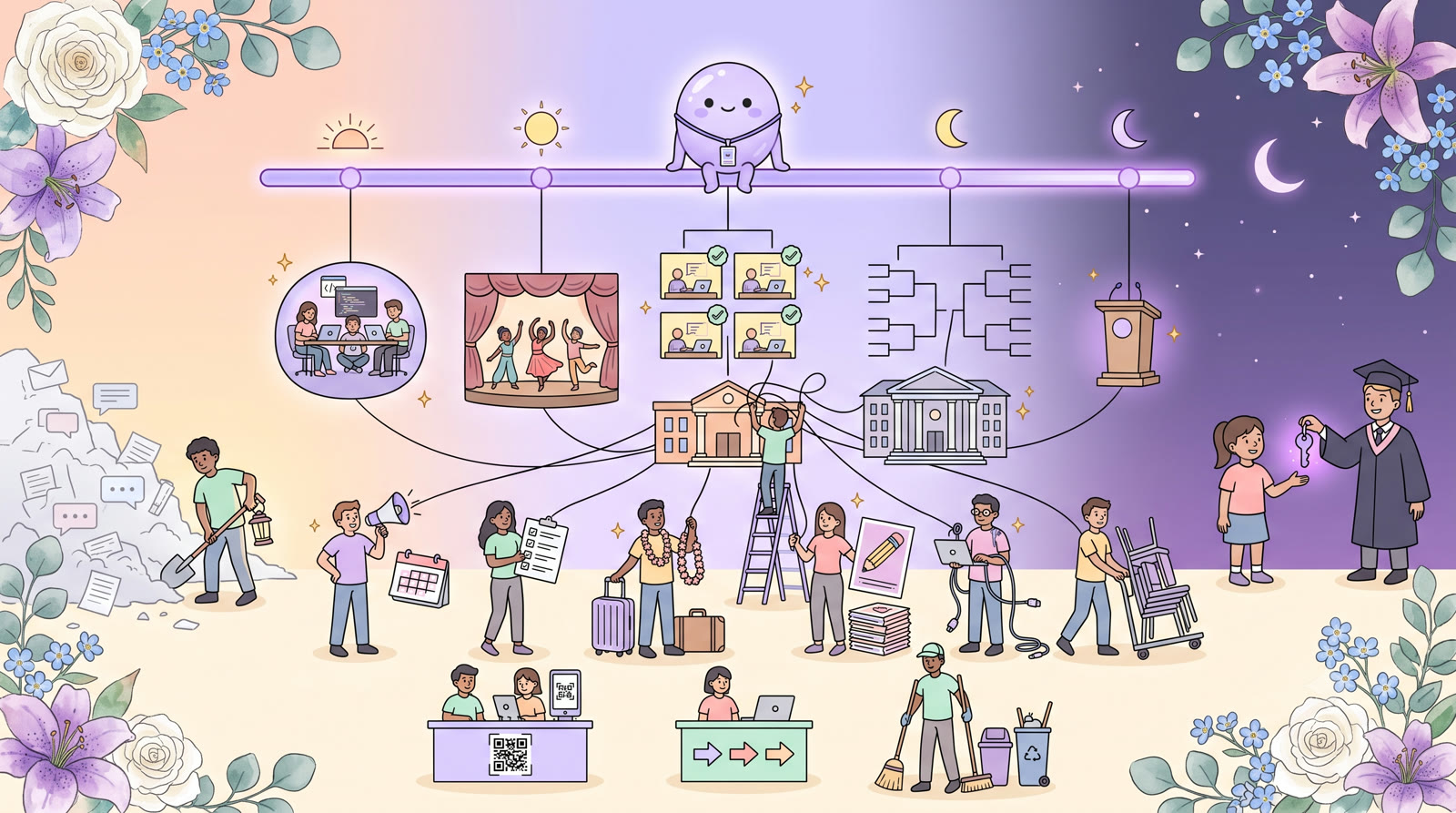
The work before the day divides fairly predictably — tracing the batch, sponsorship and contributions, the cultural night line-up and rehearsals, the souvenir booklet and memory wall, food and caterer liaison, and badges, kits and printing. The booklet in particular needs starting far earlier than feels reasonable, because it depends on other people sending you old photographs.
On the day: a registration desk that needs five in the morning and three after lunch, campus tour guides, stage and projector, the batch photo wrangler, and six people for clean-up. Most of these are an hour or two — say so when you ask, because “volunteer for the reunion” sounds like a weekend and “ninety minutes at the desk” sounds like something a person can do.
Afterwards, the photographs
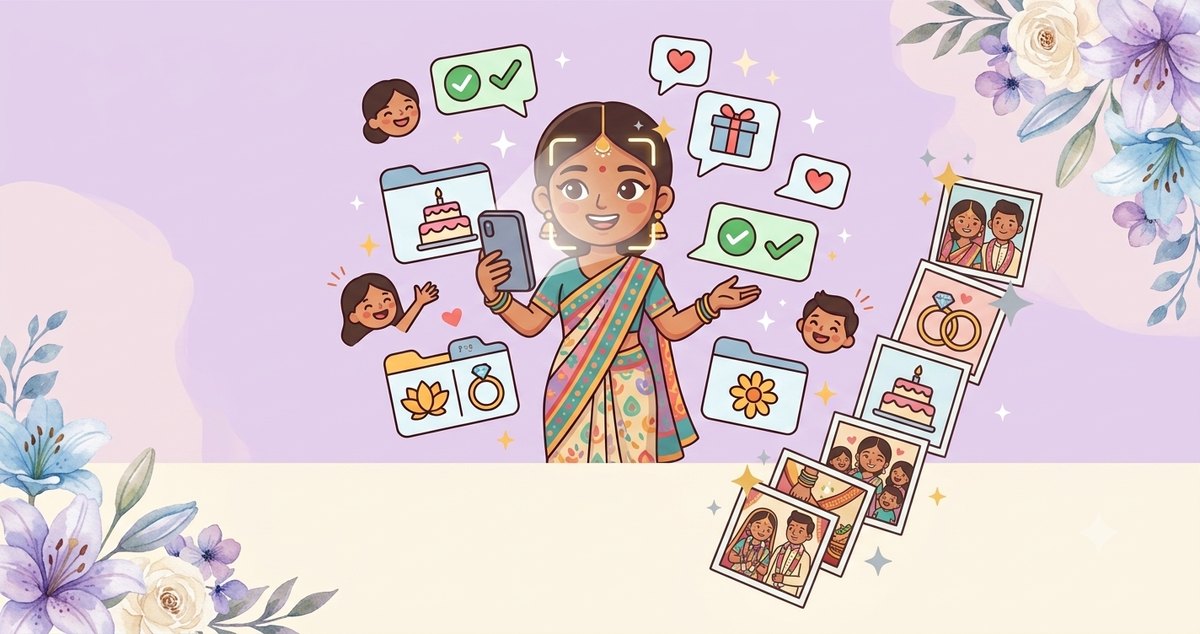
Three thousand photographs land in a shared folder, and nobody scrolls past the first two hundred. This is the part people actually ask about six weeks later — and it is solvable: a guest takes one selfie and gets back the photographs they are in, out of all of them.
The reunion is organised by the people attending it. Build the plan so that no single one of them is load-bearing.
Find the batch, ask the right question on the RSVP, track the money coming in, and give every job a number and a name. The dinner takes care of itself after that.