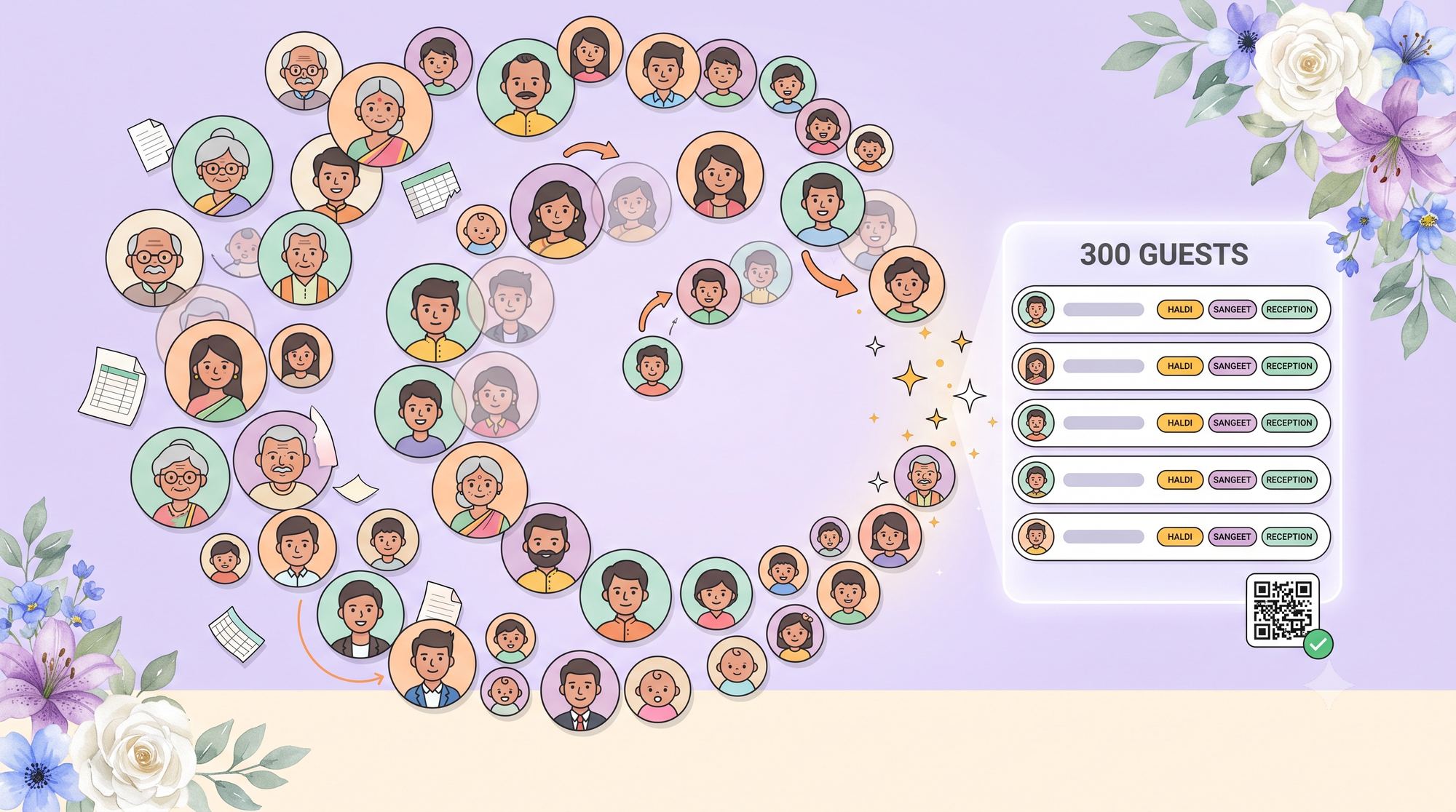
The caterer needs a final number by Friday. Right now you have 214 confirmed, 40 “probably,” and 26 who haven’t replied at all — three of whom you already know are coming, because they told your mother. The RSVP is the oldest tool in the wedding-planning kit. It’s also the one that breaks the most.
Why the RSVP card fails
The reply card was designed for a world of one wedding, one guest list, and a lot of patience. Modern celebrations broke all three. Here’s where it falls apart:
- Guests forget. The card gets set on the counter “to do later,” then vanishes under the mail. Good intentions, no reply.
- The date passes — and the chase begins. When the deadline slips, the couple becomes a collections agency, texting one household at a time.
- One yes/no can’t handle many events. A guest invited to the wedding but not the after-party, or to the reception but not the Haldi, has no way to say so on a single card.
- Tallying is manual. Answers arrive by card, by text, by phone, and through relatives — then someone types them into a spreadsheet that’s out of date the moment it’s saved.
- Plus-ones and kids stay fuzzy. “The Sharmas” might be two people or six. The card rarely makes you say which.
- Dietary notes scatter. Allergies and meal preferences land in five different places and reach the caterer in none of them.
What “chasing RSVPs” really costs
A headcount isn’t just a number — it’s the number half your other decisions depend on. Catering quantities, the seating chart, favors, welcome bags, table rentals, the plated-vs-buffet call: every one of them waits on a figure that keeps moving. And the chasing falls on exactly the people who should be enjoying the run-up to their wedding, not playing detective two weeks out.
The fix: one link, one source of truth
Instead of a paper card and a mailbox, each household gets a single RSVP link. The flow takes about thirty seconds on a phone — no app, no stamp, no login:
- The guest opens the link and finds their name against your real guest list.
- They respond Yes, Maybe, or No — and they do it per event, so they can accept the wedding and decline the late-night party without a single awkward phone call.
- They confirm exactly who in their party is coming, and leave a note or a dietary need if they have one.
- They’re done — and so are you, because there’s nothing to type up afterward.
As replies come in, they roll straight into your RSVP report: a running, per-function headcount that updates itself. No spreadsheet, no re-tallying, no “which version is current?” The number you see is the number.
Send one link. Watch the headcount build itself.
eventsplanning.ai turns your guest list into a shareable RSVP that guests answer in seconds — per event, with notes and dietary needs — while your counts and reports update live.
Collect RSVPs FreeWhy per-event RSVPs matter
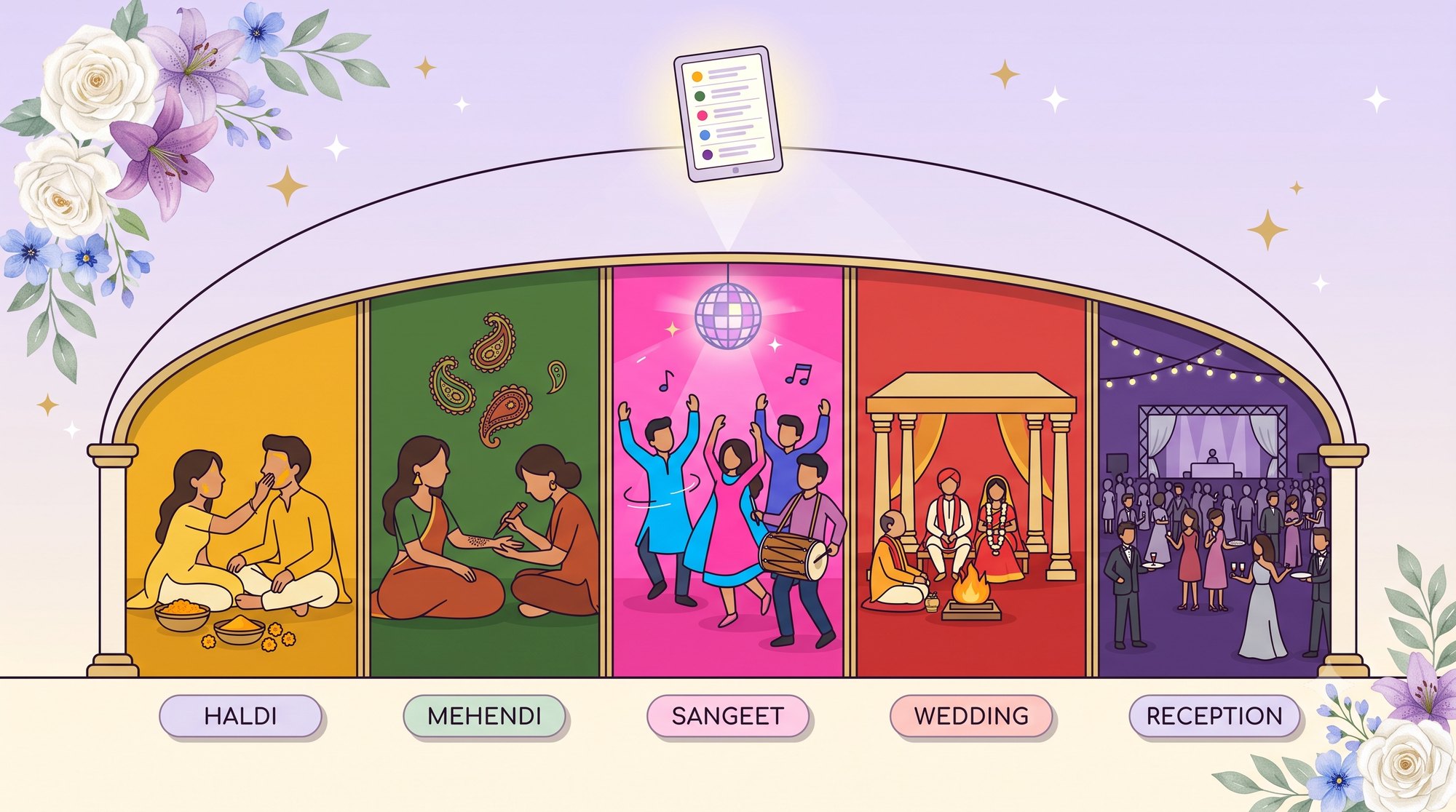
This is where multi-event weddings live or die. A Haldi, a Sangeet, the ceremony, and a reception aren’t one guest list — they’re four. The mehndi artist needs the Haldi count, the caterer needs the reception count, and the venue needs both. When each guest can say yes to some functions and no to others, every event ends up with its own honest number, and nobody plans dinner for a hundred people who were only ever coming to the ceremony.
What you get back
Beyond the tidy logistics, a proper RSVP system gives you three things the paper card never could: a headcount that’s always current, dietary notes and messages gathered in one place, and a clear picture of who’s coming to what. The seating chart, the favors, and the catering order finally rest on a figure that stops moving — and your evenings stop being spent on follow-up texts.
A good RSVP system doesn’t just collect answers — it stops you from ever having to ask twice.
Your guests want to reply. Usually they just need it to be easy, clear, and possible from the phone already in their hand. Give them a link instead of a card, let them answer for each event, and the number you’ve been chasing quietly starts to take care of itself.